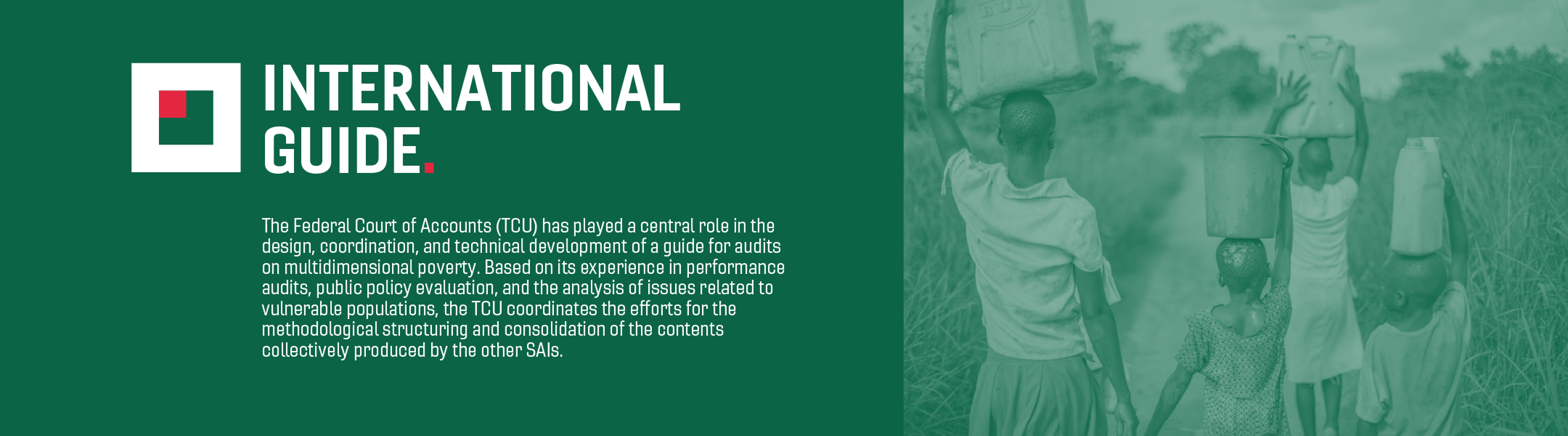
The guide seeks to address a central question: how can Supreme Audit Institutions use multidimensional poverty evidence to select audit subjects, evaluate public policies, develop recommendations with an impact, and create greater value for society? To this end, the document presents key concepts related to multidimensional poverty audits, discusses SAIs' strategic planning, proposes approaches to audit planning and execution, and explores ways to assess outcomes, impact, and public value creation.
The guide resulting from this work can be applied to audits from various perspectives. Countries with no prior experience in poverty audits will receive support in planning their first multidimensional poverty audits, while those with greater experience can improve their long-term strategic planning.
The guide can also be useful to state and municipal audit institutions with varying levels of experience.


01
International
partnerships
Who builds together


02
How Does Adopting a Guide Contribute to Government Oversight?
Multiplier effect
The proposed guide was developed for use by different Supreme Audit Institutions (SAIs), regardless of each country's specific context. Although each setting requires adaptations, adopting common principles increases the potential for comparing audits and identifying new ways of working.
As more institutions adopt this approach, their capacity to share experiences, improve audit methods, and identify practices that can contribute to addressing poverty more effectively also grows. This creates a multiplier effect: the knowledge generated by one institution can support the work of many others.
This, in turn, establishes an international network for sharing knowledge on multidimensional poverty audits, fostering cooperation among oversight institutions and the continuous improvement of the methodologies they use.
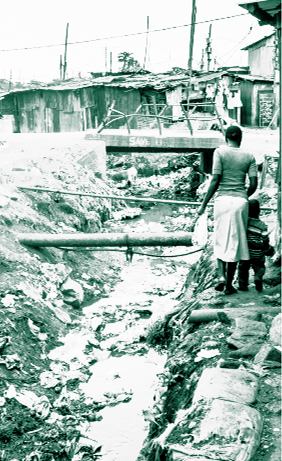
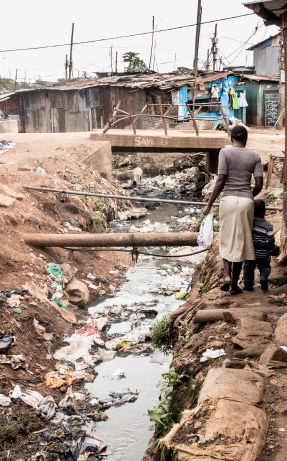
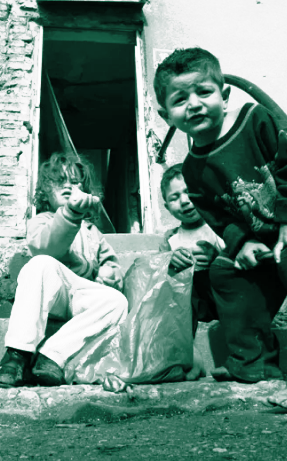
At the national level, audits will show differences in the results achieved by poverty reduction initiatives and programs across the various dimensions examined, revealing where public resources are being used effectively. They may also identify the types of deprivation that most affect the population in each locality, the causes of these deprivations, and the actions that can help alleviate them.
People see the results when public policies begin to respond more effectively to people's actual needs, rather than merely to traditional indicators.
For example, a housing program is no longer evaluated solely based on the number of homes delivered; it also considers families' access to sanitation, drinking water, and nearby healthcare facilities.
Families may not see the index, but they can see better decisions being made.
03
Next steps
What lies ahead
2026
Launch of the guide on multidimensional poverty audits jointly with the other SAIs.
2026
Calculation of the MPI-A for municipalities and dissemination of the results to State and Municipal Courts of Accounts.
2027
Pilot audits by Supreme Audit Institutions (SAIs) in other countries, using the guide as a reference.
2027
A coordinated audit with Brazil's State and Municipal Courts of Accounts, supported by the guide and the MPI-A.